

In this article, you will discover: Why insurance companies and defense attorneys review your social media. How your social media can be taken out of context in a personal injury case. Whether your social media can be used to strengthen your personal injury claim. Why Do Insurance Companies And Defense Attorneys Review Social Media After An Accident? If you’re discussing or posting about your accident or injuries on social media, that information is absolutely discoverable in litigation. The reason insurance companies and defense attorneys review your social media is to see whether you’re telling the truth. For example, suppose you've claimed you can't move easily due to your injury, but on social media, you've posted a video of you effortlessly performing intense aerobics, that will contradict what you're alleging. An insurance company will use that evidence to try to deny your claim. How Can Photos,…Read More
In this article, you will discover: The meaning of “pain and suffering” in an Oregon personal injury case. The types of injuries that qualify as pain and suffering in an Oregon personal injury case. The types of evidence needed to prove pain and suffering in Oregon. What Does “Pain And Suffering” Mean In An Oregon Personal Injury Case? Pain and suffering are part of any personal injury claim, or tort claim, as it’s called at law. They are often referred to as “primary compensation, "general damages," "non-economic damages" or "hedonic damages." Specifically, they are damages resulting from the injury sustained. Pain and suffering, or general damages, are distinct from “special damages,” also known as economic damages. Those are any damages you can put a price tag on, such as lost wages, the cost of doctor’s visits or other medical bills. What Types Of Physical Injuries…Read More

In this article, you will discover: How insurance companies in Oregon evaluate claims involving pre-existing conditions or prior injuries. The evidence required to prove that an accident aggravated a pre-existing condition. The importance of medical records as evidence to support your Oregon personal injury claim. How Do Insurance Companies Typically Evaluate Claims Involving Prior Injuries Or Medical Conditions? In any personal injury case, pre-existing injuries or medical conditions are almost always an issue. If you broke your arm in an accident, the situation is clear-cut: an X-ray would show the broken bone that wasn't there before the accident. However, many situations are not that clear-cut, and that's a problem. The law starts with the premise that if a defendant causes an injury, they must take responsibility for that injury. However, if there was a pre-existing condition or injury, the court recognizes that the defendant didn't…Read More

In this article, you will discover: What to do in the immediate aftermath of a hit-and-run accident in Oregon. How insurance coverage applies in Oregon when the at-fault driver can’t be identified. Why seeking legal guidance is important after sustaining a hit-and-run injury. What Should I Do Immediately After A Hit-And-Run Accident Occurs? If you're hit in a hit-and-run accident, your priority is to make sure that you're safe. If you're able and haven't already, move to the side of the road. If your injury is life-threatening, don't delay life-saving medical care. Otherwise, regarding key information you need to collect, you’ll want to assess your physical condition and write down as much information about the person who caused the accident as you can, even if it's only a partial license plate number or the color of the vehicle. Then, contact the police to report a…Read More
Losing a loved one because of someone else’s negligence is devastating. In addition to coping with that loss, you may also face legal questions about what steps can be taken and what is required to pursue a claim. In this article, we’ll overview… How wrongful death claims work in Oregon, and when you would file one. The types of evidence that may be involved in proving negligence. Why families often benefit from speaking with an attorney early in the process. What Is A Wrongful Death Claim, And When Can One Arise? A wrongful death claim arises when someone passes away because of another person’s negligence or fault. These cases are always tragic, and they often occur in situations such as serious motor vehicle accidents where one person’s actions lead to another person’s death. In Oregon, a wrongful death claim is brought on behalf of the…Read More

Many drivers assume that if they are hit by someone without insurance, recovering compensation will be impossible. Fortunately, that is not always the case. In this article, we’ll unpack… How uninsured driver accidents in Oregon are handled. The types of uninsured motorist situations that can arise. The challenges these claims may present, and when it may be helpful to speak with an attorney. What Should I Do If The Other Driver Has No Insurance After An Oregon Car Accident? If the other driver involved in a crash does not have insurance, Oregon law still provides a potential path for recovery. Auto insurance policies issued in Oregon are required to comply with state law, and one of those requirements is uninsured motorist coverage. This type of coverage is designed to protect you if you are injured by someone who does not carry insurance. Instead of pursuing…Read More
When a car accident happens, determining who is responsible is not always straightforward. In some cases, more than one person may have contributed to the crash. In this article, we’ll explain… How Oregon’s comparative fault law works in light of a personal injury claim. How responsibility is determined after an accident. How fault percentages can influence the outcome of a personal injury claim. What Does “Comparative Fault” Mean Under Oregon Law In Car Accidents? Comparative fault refers to the way Oregon law looks at responsibility when more than one person may have contributed to an accident. It compares the conduct of the injured person and the person believed to be at fault to determine how much responsibility each party bears. This often comes up in situations where the injured person may have done something that contributed to the accident. For example, imagine someone is driving…Read More

After a car accident, the strength of an injury claim often depends on the quality and availability of evidence. In this article, we’ll discuss… What evidence and information to collect at the scene of the accident. The role of police reports in establishing fault and providing details about the crash. Why medical documentation and financial records are so important. What Information Should Be Collected Immediately After A Car Accident? Under Oregon law, drivers involved in an accident are required to provide certain information. https://www.oregonlegislature.gov/bills_laws/ors/ors811.html. This is often referred to as performing the duties of a driver. When someone fails to provide this information, they can be cited for failure to perform those duties. The required information generally includes: The name of the driver (and name of the owner of the vehicle if different from the owner) The address of the driver The insurance information for…Read More
Many consumers who buy an insurance policy assume their provider will be on their side, should the need to file a claim arise. Insurance companies have a duty to act in good faith, meaning that when they issue a policy they must in good faith pay benefits if a claim is made and certain required conditions are met. Unfortunately, insurers do not always uphold their side of the bargain, and sometimes even refuse to honor a claim. Worse still, they may refuse to defend an individual. When an insurance company refuses to pay a claim, it can be difficult to know if what the company is saying is correct. Genuine disputes do exist, such as when the insurer denies benefits because they fall outside the policy coverage. If this has happened to you, consult an attorney who can give you legal advice about what the…Read More
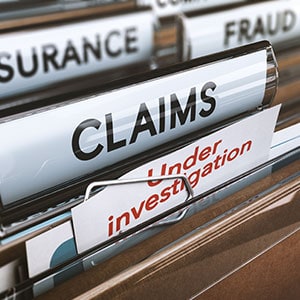
Is your insurance company not paying to fix your car or not paying a fair value for your car after an accident? If so, ORS 20.080 might be just the tool you need to fix that problem. Mistakes happen, we all know it. That is why we have insurance. But what happens when the insurance companies don’t do the right thing and pay for those mistakes? If you were involved in a motor vehicle crash (sometimes called motor vehicle accident or MVA), trucking accident, or motorcycle accident, the person who caused the damage should take responsibility. If the responsible party has insurance, that person’s insurance should fulfill the obligations of its insured. Sometimes, however, an insurance company does not do honor its obligations. For instance, the company may not pay for all the repairs, or cover the full value of vehicle (if totaled). They may…Read More



